
Business / News
IEA World Energy Outlook 2026: What the Energy Shock Means for Power and Prices
IEA's World Energy Outlook 2026 explains how energy supply disruption, rising electricity demand, AI data centres and power-grid constraints could affect the years ahead.
Short Article
On 19 November 2026, the International Energy Agency released World Energy Outlook 2026 amid a major disruption to oil and gas supplies through the Strait of Hormuz. The report finds that electricity demand has been rising faster than overall energy demand, driven by industry, cooling, electric vehicles and data centres. Its scenarios see electricity approaching 30% of final energy use by 2035. In the Stated Policies Scenario, data-centre electricity use roughly doubles to 1,000 terawatt-hours by 2030. These are conditional scenarios, not guaranteed forecasts. Expanding grids, transformers and storage may be as important as building new power plants. Household energy bills still depend on local tariffs, fuel costs and regulation. The IEA also estimates that roughly 720 million people lack electricity access. Readers should distinguish observed developments from projections and check local energy information before drawing conclusions.
The International Energy Agency’s World Energy Outlook 2026, published on 19 November, finds that a historic disruption to oil and gas supplies is colliding with a longer-term shift toward electricity. Governments are rethinking energy security, businesses are facing more uncertain costs, and power grids must support growing demand from cooling, industry, electric vehicles and artificial intelligence.
The report does not offer a single prediction for oil prices or electricity bills. Instead, it models several possible paths based on policies, market conditions and responses to this year’s energy crisis. Its central warning is that a country can reduce dependence on imported fuels while creating different vulnerabilities in electricity networks, equipment supply chains and critical minerals.
For readers, the practical question is not just whether the world will use more electricity. It is whether power systems can deliver it reliably and affordably while protecting people who still lack modern energy services.
What Has the IEA Reported?
The World Energy Outlook 2026, released on 19 November 2026, examines the effects of the Middle East supply crisis and the interruption of transit through the Strait of Hormuz. The IEA describes the disruption as the largest energy supply shock the world has faced.
According to the report’s executive summary, the cumulative impact included an estimated 2.8 billion barrels of oil and 60 billion cubic metres of gas in disrupted Gulf supply. The 2.8 billion-barrel oil figure refers to losses accumulated during the crisis through the end of October—not to production lost in a single day or a prediction of future losses.
Other suppliers, emergency reserves and alternative routes helped cushion the shock, but the IEA reports that higher prices and reduced consumption increasingly became part of the adjustment. A crisis affecting fuel trade can reach far beyond filling stations: transport, manufacturing, farming, food distribution and electricity production may all face costs, depending on local conditions.
The IEA’s 19 November press release stresses that the severity of longer-term effects depends partly on how long disruptions persist.
Why Is Electricity Growing Faster Than Overall Energy Demand?
The IEA finds that since 2019, global electricity demand has grown faster than the world economy and about twice as fast as overall energy demand. The reasons extend well beyond artificial intelligence.
Factories are using electric motors and equipment; households are adding air conditioners and other appliances; transport is increasingly electrified; and heat pumps provide heating and cooling. Rapid growth in digital infrastructure adds another substantial source of demand in some locations.
Electricity currently represents around 23% of global final energy consumption, according to the IEA. In the report’s exploratory scenarios, its share approaches 30% by 2035. These are modelled outcomes under different assumptions—not a guarantee that every country will achieve the same share.
A useful distinction is between final energy, such as electricity or fuel delivered to users, and the services people want from it, such as a cooled home or a journey. The IEA expects demand for those services to rise as incomes and populations grow. How much fuel is needed depends on the efficiency and technologies used to meet that demand.
Why Does Cooling Matter So Much?
The report identifies a striking shift: worldwide demand for cooling services has overtaken demand for heating services. Rising incomes, urban development and hotter conditions are changing where electricity systems will face stress.
In many fast-growing economies, a household may acquire an air conditioner for the first time just as electricity networks are already dealing with industrial growth. That creates a planning challenge: a city may need enough supply during a particularly hot afternoon, even if its average daily demand is much lower.
The IEA notes that energy needs are growing especially quickly in India and Southeast Asia. This does not establish that every household in those regions already has reliable electricity or access to cooling. It highlights why affordable, efficient equipment and dependable grids matter alongside new generation capacity.
For readers, the takeaway is that energy planning must consider when electricity is used, not only the total amount consumed over a year. Insulation, efficient cooling systems and well-designed demand management can help, but each country’s options and costs differ.
How Big Is the AI Data-Centre Electricity Challenge?
Artificial intelligence is a highly visible part of the electricity story, but it is not the only driver. Data centres also serve cloud computing, business software, storage and other digital services.
In the IEA’s Stated Policies Scenario, data-centre electricity use roughly doubles to about 1,000 terawatt-hours by 2030. A terawatt-hour is a unit of energy equal to one billion kilowatt-hours. This is a scenario result, not a measured 2030 outcome.
Its accompanying Energy and AI analysis explains that forecasts depend on how quickly data centres are built, whether grid connections and equipment are available, how efficiently computing is used and whether proposed projects actually proceed.
That uncertainty matters because a single large data-centre campus can put more pressure on a local grid than its share of global demand suggests. Connection queues, transformers, cooling needs and where power is generated can determine whether additional electricity supply arrives on time.
For example, imagine two towns with similar annual electricity consumption. One adds a major data centre without nearby transmission upgrades, while the other spreads new demand across an area with spare network capacity. Their reliability and investment challenges may differ sharply. This is an illustrative comparison, not a report about any named project.
It would be misleading to conclude that each AI request has a fixed worldwide electricity or carbon cost from these projections alone. The impact depends on the computing task, technology, location, power mix and period measured.
Why More Power Plants May Not Be Enough
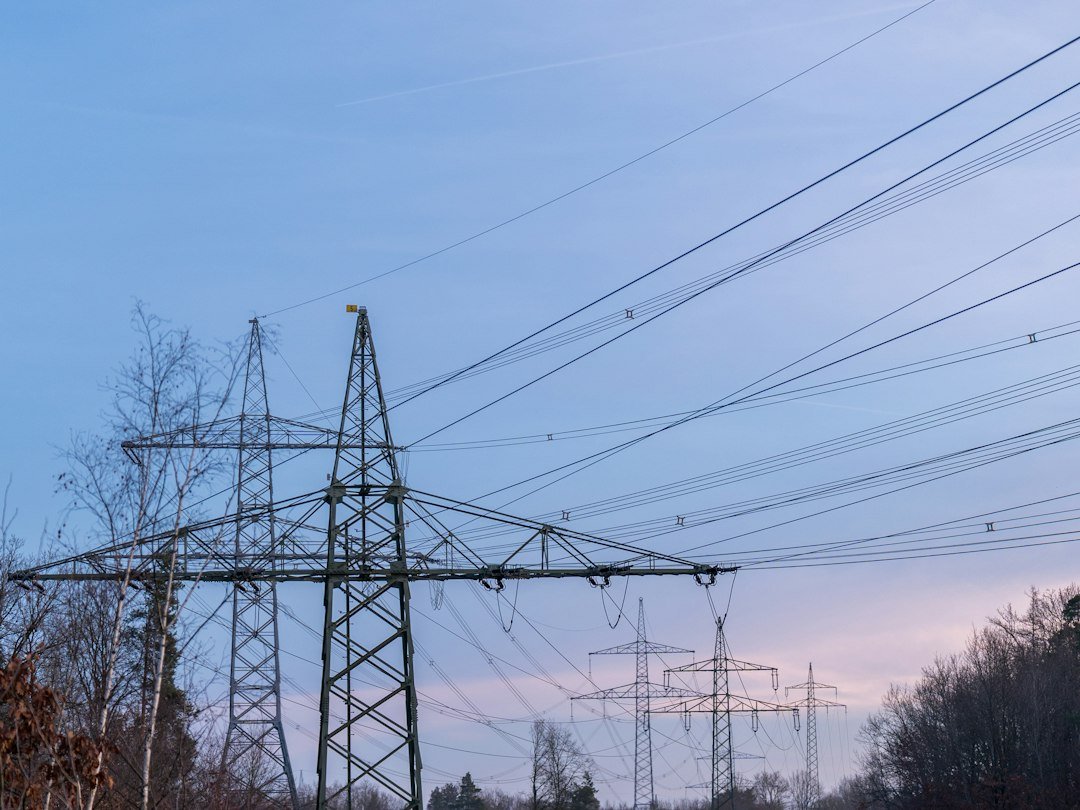
Producing electricity is only part of delivering it. Power must travel through transmission and distribution lines, substations and transformers, and the system must maintain a balance between supply and demand.
The IEA says constraints on electricity networks and equipment are becoming more important. Some manufacturers face long lead times for critical components. Building renewable generation, a gas plant or another source of power does not automatically solve a connection bottleneck elsewhere.
Energy security is therefore changing meaning. Under a fuel-heavy system, governments focus on supply routes, storage and import agreements. In a more electrified economy, they must also think about grid reliability, batteries, flexible demand, cybersecurity and access to the materials needed for electrical equipment.
The report warns that replacing one dependency with another is possible. Expanding domestic solar generation may reduce exposure to imported fuel prices, for example, while increasing the need to manage supplies of equipment and materials and invest in grid flexibility. The appropriate mix differs by country.
Does More Electrification Automatically Lower Energy Bills?
No. Electrification can improve efficiency in many applications and reduce exposure to fuel-price swings, but the cost consumers pay depends on how electricity is produced, regulated and delivered.
Electricity bills may reflect fuel costs, generation and network investments, taxes, tariffs, retail contracts and public support mechanisms. A region can have inexpensive new renewable power while still facing expensive network upgrades or a period of high prices.
Similarly, lower global oil or gas prices do not always translate immediately into lower household costs. Local taxes, currency movements, contracts and supply constraints can affect the final price.
The IEA explores several outcomes for oil and gas demand. Under its Stated Policies Scenario, oil use levels off near 103 million barrels a day around 2030 before slowly declining; under the more far-reaching Additional Response Case, oil use falls earlier as countries adopt additional security measures. Neither should be described as an unconditional market forecast. The IEA’s key findings explain why different responses produce different results.
The practical lesson is to be cautious with claims that one headline—an energy crisis, a solar project or an AI investment—will automatically determine everybody’s future bills.
What Do the IEA’s Scenarios Actually Mean?
The report compares possible futures rather than assigning certainty to one:
- Current Policies Scenario (CPS): Examines outcomes based on policies and regulations already firmly in place.
- Stated Policies Scenario (STEPS): Includes measures governments have formally put forward, even where some are not yet adopted.
- Additional Response Case (ARC): Tests how the market could change if governments make further responses to lasting energy-security concerns.
- Low Hormuz Case (LHC): Tests the consequences of a much more constrained trade route through the Strait of Hormuz.
- Net Zero Emissions by 2050 Scenario (NZE): Describes a pathway designed around an emissions objective, rather than a forecast of what governments will necessarily deliver.
These distinctions matter when reading a statistic. The projection of 1,000 terawatt-hours for data centres in 2030, for example, comes from the STEPS case. It should not be presented as electricity already consumed or as the only credible outcome.
IEA modelling is extensive, but it remains subject to uncertainty about policies, technology, economic activity, weather, investment and geopolitical events. The full executive summary explains the scenario definitions and key assumptions.
Who Could Be Hurt Most by an Energy Shock?
The burden of expensive or scarce energy is not evenly shared. Fuel-importing countries can face pressure on trade balances, public budgets and households. People without reliable access to electricity or cleaner cooking options may have even fewer ways to respond to rising prices.
The IEA estimates that roughly 720 million people still lack electricity access, while nearly 2 billion rely on polluting cooking methods. These are broad global estimates, not counts newly created by the 2026 crisis.
Price increases can delay the expansion of modern energy access or encourage households to use older, less desirable fuels alongside cleaner ones. Reliable electricity and affordable cooking solutions should therefore be central to the energy-security discussion, not treated as afterthoughts.
In countries where electricity access is already widespread, other vulnerabilities matter: vulnerable consumers, businesses dependent on reliable power, and communities facing delays in infrastructure upgrades. The relevant response needs local evidence, not a one-size-fits-all global claim.
What Should Readers and Businesses Watch Next?
Three practical checks can help people interpret future energy headlines without treating the IEA scenarios as predictions:
- Separate the report date from the projected year. Data collected about 2025, the 2026 energy shock and scenarios for 2030 or 2035 do not describe the same timeframe.
- Identify the local constraint. Rising bills may be driven by fuel prices, taxes or network investment; delays in connecting new projects may come from transformer shortages, regulation or transmission limits. A global headline rarely identifies the single local cause.
- Ask what is confirmed. For a proposed data centre, power plant or grid project, distinguish announced capacity from fully financed construction, connection approval and electricity actually delivered.
For households, keeping track of electricity usage, efficiency and official tariff information is more useful than reacting to dramatic claims about a guaranteed price spike. For businesses, understanding exposure to energy supply interruptions and the age of critical equipment can support realistic planning.
None of these steps removes uncertainty. They help readers ask better questions and distinguish what has already happened from what governments and companies might choose to do.
The Bottom Line
World Energy Outlook 2026 shows why future energy security cannot be measured only by how much oil, gas or electricity a country produces. It also depends on trade routes, the reliability of power grids, affordability, infrastructure investment and the ability to provide modern energy services to people who still lack them.
The IEA’s scenarios point to a faster shift toward electricity, including growing demand for cooling and computing. How countries manage that shift will influence costs, security and emissions—but the report does not promise a single outcome.
Primary Sources and Further Reading
- IEA — World Energy Outlook 2026 (published 19 November 2026)
- IEA — World Energy Outlook 2026 Executive Summary
- IEA — Ten Questions, Overview and Key Findings
- IEA — Official Press Release, 19 November 2026
- IEA — Key Questions on Energy and AI, Executive Summary
Editorial methodology: This article synthesizes IEA primary publications and distinguishes observed developments from scenario results. No independent electricity-price survey, grid inspection or interview was conducted. Global projections are not guarantees of local outcomes.
ARTICLE REFERENCES
Sources & Links
Explore the original resources and supporting documents.
- IEA World Energy Outlook 2026 Full Reportiea.org
- IEA World Energy Outlook 2026 Executive Summaryiea.org
- IEA World Energy Outlook 2026 Overview and Key Findingsiea.org
- IEA World Energy Outlook 2026 Press Releaseiea.org
- IEA Key Questions on Energy and AIiea.org
External references open in a new tab. Please review the information at its original source.








AVIRALON NEWS / COMMUNITY
Comments (0)
Comments are moderated. Your comment will be reviewed by the AVIRALON editorial team before appearing publicly. Please keep the discussion respectful and relevant.
No approved comments yet.
Commenting will open after moderation and privacy checks are completed.