
Science / News
Voyager 1 Reaches One Light-Day From Earth as NASA Investigates Missing Data
NASA confirmed Voyager 1 reached one light-day from Earth on 18 November 2026. Here is why signals now take 24 hours, what a new data issue means and what the spacecraft is still teaching scientists.

Short Article
NASA confirmed that Voyager 1 became the first human-made object to reach one light-day from Earth on 18 November 2026, about 16.1 billion miles (25.9 billion kilometres) away. Radio signals now need approximately 24 hours to travel each way, making a command-and-response exchange take at least two days. The milestone coincides with a technical problem: NASA had not received science or engineering data since 14 November, although the spacecraft's radio carrier was still detected. Engineers were investigating the issue, not reporting a confirmed repair. Launched in 1977, Voyager 1 entered interstellar space in 2012, beyond the Sun's heliosphere, but has not passed the distant Oort Cloud. Its ageing electrical generator also loses power over time. NASA's official mission page tracks the spacecraft's location and instrument status. A light-day measures distance, not how long Voyager took to travel.
NASA’s Voyager 1 has become the first human-made object to reach a distance of one light-day from Earth. The spacecraft crossed the milestone on 18 November 2026 at 2:16 a.m. Pacific Standard Time, according to NASA’s Jet Propulsion Laboratory (JPL). At that point it was approximately 16.1 billion miles (25.9 billion kilometres) away.
The achievement comes with an engineering challenge. NASA reported that Voyager 1 had stopped returning science and engineering data after 14 November, although ground antennas were still receiving its radio carrier signal. Mission controllers confirmed the distance milestone using the received carrier and long-established trajectory calculations. As of NASA’s 19 November announcement, engineers were still investigating the interruption.
The result is a remarkable lesson in distance, communication delay and the resilience of a spacecraft launched almost half a century ago. It also illustrates why a historic distance record should not be confused with proof that all onboard systems are working normally.
What Happened on 18 November 2026?
JPL confirmed that Voyager 1 crossed the one-light-day threshold on 18 November, with the announcement published the following day. A light-day is a distance, not a journey time for the spacecraft: it is how far light travels through a vacuum in 24 hours.
NASA gives the milestone distance as approximately 16,094,799,096 miles (25,902,068,356 kilometres). Voyager 1 reached it after more than 49 years of travel. The spacecraft itself moves at roughly 38,000 miles per hour (61,000 kilometres per hour), extraordinarily fast by ordinary standards but far slower than light.
The mission team received the radio carrier about 24 hours after the milestone, because even radio signals moving at light speed take a full day to cross that separation. The moment of crossing was established from the probe’s well-understood trajectory and the signal that continued to arrive. These details are documented in NASA/JPL’s 19 November release and NASA’s light-day explainer.
How Far Is One Light-Day, Really?
The word light is important because it sets a fundamental communication limit. Radio waves, visible light and other electromagnetic radiation travel at essentially the speed of light in space. A signal cannot reach Voyager 1 instantly, no matter how powerful the transmitter is.
- Earth to Moon: A radio message takes roughly 1.3 seconds one way at the Moon’s average distance.
- Earth to Sun: Light takes about eight minutes and twenty seconds; this is the Sun-to-Earth distance, not a spacecraft communication path.
- Earth to Mars: Depending on the planets’ positions, a signal can take about three to twenty-two minutes one way.
- Earth to Voyager 1 at the milestone: A signal needs approximately 24 hours one way.
These comparisons come from NASA’s light-distance guide. The distance to a moving spacecraft changes over time, so 24 hours describes the November 2026 milestone rather than a fixed delay forever.
For a practical example, imagine controllers send a diagnostic command at noon. Around one day later, it reaches the probe. Even if the spacecraft could respond immediately, the reply would need roughly another day to return. That makes about 48 hours the minimum two-way light-travel time, before accounting for processing, antenna schedules or repeated troubleshooting.
This delay makes ordinary ideas such as pressing a button, observing the result and immediately trying again impossible. Spacecraft must execute instructions autonomously while controllers work from information that is already a day old.
What Is the New Voyager 1 Data Problem?
NASA reported on 18 November that the Voyager team had noticed a loss of science and engineering data on 14 November. A Deep Space Network antenna in Canberra, Australia, received a carrier signal from the spacecraft but no usable data.
A carrier is the radio signal used to convey information. Detecting it establishes something important: the probe can still transmit a recognizable radio signal toward Earth. According to NASA’s technical update, the carrier indicates the attitude-control system is keeping the antenna pointed toward Earth and that the radio transmission equipment is operating.
Receiving a carrier is not the same as receiving science or engineering telemetry. A fault in the onboard system that gathers or formats data was one possibility NASA was examining. The available reports do not establish a confirmed cause or successful repair. It would therefore be inaccurate to say that the spacecraft has stopped functioning altogether, or that its science data has resumed.
NASA said engineers were also investigating whether the November problem had any connection to a brief communications interruption in October 2026. A similar carrier-without-data episode occurred in 2023, but similarity does not prove the same underlying fault.
The long communication delay matters here too. If engineers need to test a diagnosis, a command-and-reply cycle takes roughly two days even in ideal conditions. Several rounds of evidence gathering may extend the investigation over weeks or longer.
How Can NASA Know the Distance if the Data Is Missing?
Spacecraft navigation is not calculated from a single message giving a position. Teams have tracked Voyager 1 over decades, modelling its trajectory and using radio observations to understand how it moves through space.
The spacecraft does not have to send a fresh set of scientific measurements for NASA to calculate where it should be at a particular moment. Its path and speed are already constrained by years of navigation data. The remaining carrier provides an additional observation consistent with continued radio contact.
NASA specifically said the probe’s engineering interruption would not change when it crossed the one-light-day threshold, because the spacecraft continues along its known outward trajectory. This distinction—confirmed distance versus temporarily unavailable payload data—is central to interpreting the milestone responsibly.
Where Is Voyager 1: Has It Left the Solar System?
Voyager 1 entered interstellar space in August 2012 after crossing the heliopause, the outer boundary of the bubble created by the Sun’s solar wind and magnetic field. Voyager 2 crossed that boundary in 2018.
Being beyond the heliopause is not necessarily the same as leaving the entire solar system under every scientific definition. Distant objects influenced by the Sun’s gravity, including bodies in the hypothetical outer Oort Cloud region, lie much farther out. NASA says Voyager 1 may need about 300 more years to reach the inner edge of the Oort Cloud and perhaps about 30,000 years to pass beyond it.
The distinction is explained in NASA’s Voyager FAQ. The accurate description is that Voyager 1 is travelling through interstellar space beyond the heliosphere. Calling it completely beyond every possible boundary of the solar system would be misleading.
The spacecraft also remains far from another star. NASA’s distance guide describes the closest neighbouring star system as about 4.24 light-years away. A light-day milestone is immense on a human scale, but still small compared with interstellar distances.
Why Was Voyager 1 Sent So Far From Earth?
Voyager 1 launched on 5 September 1977, after Voyager 2, to explore the outer planets during a rare favourable planetary alignment. Its flybys of Jupiter and Saturn transformed knowledge of those worlds and their moons. Voyager 2 took a different path and later visited Uranus and Neptune.
Gravitational encounters allowed the spacecraft to change speed and direction without carrying enough fuel to power a conventional trip across those enormous distances. After its planetary encounters, Voyager 1 continued outward toward the boundary of the Sun’s particle environment.
Today, the long-term scientific goal is to understand the region beyond the heliosphere: interstellar plasma, magnetic fields and the interaction between material originating from the Sun and the space between stars. NASA’s mission overview and latest milestone report explain why the mission’s scientific value survived long after its original planetary encounters.
The two Voyagers also carry Golden Records, collections of sounds and images representing Earth. They are cultural time capsules, not devices that would enable two-way communication with anyone who might encounter them.
What Makes Communicating With Voyager Difficult?
NASA uses its Deep Space Network (DSN), large radio-antenna facilities near Goldstone in California, Madrid in Spain and Canberra in Australia, to communicate with distant missions. Their geographic separation allows Earth to rotate while different stations become favourably positioned.
The DSN must manage very weak signals, the rotation of Earth, antenna availability and the needs of multiple spacecraft. Voyager’s growing distance makes every successful exchange more demanding. NASA’s DSN explanation describes the system and its three sites.
At one light-day, an operator cannot drive the spacecraft by joystick. Engineers prepare carefully checked command sequences, account for possible faults and use onboard control systems to maintain pointing and other functions between contacts. The current carrier-only situation shows why those basic systems are so valuable, while also showing that successful radio contact does not guarantee access to all instrument data.
How Long Can the Spacecraft Keep Operating?
Voyager 1 runs on a radioisotope thermoelectric generator. Instead of solar panels, which would deliver extremely little power at this distance, the generator converts heat from radioactive decay into electricity.
NASA reports that the available electrical power decreases by about four watts each year. Engineers have progressively shut down instruments or substituted lower-power equipment to preserve the most valuable remaining capabilities.
The 19 November JPL release says recent energy-saving measures were expected to support the current scientific instrument suites of the twin probes until at least their fiftieth launch anniversaries in 2027. That is an engineering expectation, not a guarantee: unexpected hardware or communications failures can still limit operations.
Aging systems face additional problems such as restricted fuel for attitude-control thrusters and electronics built decades before today’s computing hardware. Engineers continually balance saving power against retaining scientifically useful functions.
Does This Milestone Change Anything for Earth?
Crossing one light-day did not cause a sudden change in Voyager’s surroundings or switch on a new instrument. It is a distance milestone, not a scientific boundary. Its deeper value lies in what it demonstrates about spacecraft longevity, remote navigation and long-delay communications.
The same principles matter to future robotic missions travelling far from Earth. Engineers must design systems to tolerate delays, recover from faults with incomplete information, and operate when direct human control is impossible. Those are broader engineering lessons, not evidence that Voyager’s particular hardware will be copied into the next spacecraft.
The mission also gives scientists observations from a region humans cannot visit directly. But the November data interruption means that fresh Voyager 1 science measurements were not reaching Earth as of NASA’s latest confirmed update. Further claims about recovery should wait for a new NASA mission report.
How Can You Follow Voyager 1’s Real Status?
NASA maintains an official Voyager location and instrument-status page with distance visualisations and instrument information. The agency also publishes mission updates when the engineering team has verified new developments.
Three questions help distinguish careful reporting from exaggerated headlines:
- Is the figure a distance or a travel duration? One light-day is how far light moves in one day; it took the spacecraft more than 49 years to reach it.
- Is NASA receiving a radio carrier or decoded scientific data? These are different levels of communication.
- Has the agency confirmed a repair? A suspected cause, an attempted command and a verified restoration of data should not be described as the same event.
NASA also published a short official explainer on Voyager 1’s light-day distance. The video offers a visual introduction but does not replace the written technical status updates.
The Bottom Line
Voyager 1’s arrival at one light-day from Earth is a genuine first for human technology. NASA confirmed the November 18 milestone at approximately 25.9 billion kilometres using the probe’s known path and a radio carrier received a day later.
The achievement should be celebrated without overlooking the technical problem: Voyager 1 had not returned science or engineering data since November 14 at the time of NASA’s November 19 report. The spacecraft is still detectable, but engineers have not yet announced a confirmed solution to the current data issue.
For readers, the most memorable fact is also the most practical lesson in deep-space exploration: a question sent to Voyager now needs roughly two days for a possible answer to return, even when everything works as intended.
Primary Sources and Further Reading
- NASA/JPL — Confirmed one-light-day milestone, 19 November 2026
- NASA — Technical update on the missing Voyager data
- NASA — What is a light-day? Distance and communication explained
- NASA — Voyager locations and instrument-status page
- NASA — Voyager mission FAQ and the Oort Cloud distinction
- NASA — How the Deep Space Network works
- NASA — Voyager mission overview and updates
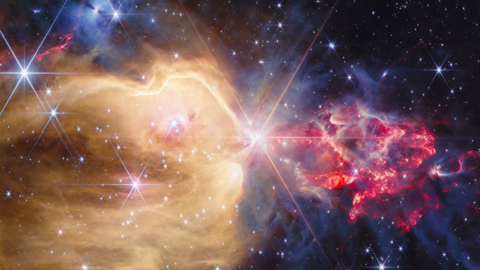
Editorial methodology: Milestone times, distances, science status and mission specifications are drawn from NASA and JPL publications available by 20 November 2026. The round-trip communication example is an explanatory calculation, not a report of a specific command being sent. The featured NASA/JPL-Caltech artwork is an artist’s illustration, not a photograph taken of Voyager 1 in interstellar space.
ARTICLE REFERENCES
Sources & Links
Explore the original resources and supporting documents.
- NASA JPL Confirmed Voyager One-Light-Day Milestone 19 November 2026jpl.nasa.gov
- NASA Voyager Data Interruption Engineering Update 18 November 2026science.nasa.gov
- NASA What Is a Light Dayscience.nasa.gov
- NASA Voyager Locations and Instrument Statusscience.nasa.gov
- NASA Voyager Frequently Asked Questionsscience.nasa.gov
- NASA Deep Space Network Overviewnasa.gov
- NASA Voyager Mission Overviewscience.nasa.gov
- short official explainer on Voyager 1's light-day distanceyoutube.com
External references open in a new tab. Please review the information at its original source.







AVIRALON NEWS / COMMUNITY
Comments (0)
Comments are moderated. Your comment will be reviewed by the AVIRALON editorial team before appearing publicly. Please keep the discussion respectful and relevant.
No approved comments yet.
Commenting will open after moderation and privacy checks are completed.