
Science / News
UNEP Says 46 Major Methane Sources Addressed: How Satellite Alerts Help Cut Emissions
UNEP reports confirmed action at 46 major methane sources in 13 countries. Learn how satellite monitoring works, what the figures mean, and why reporting is not the same as cutting emissions.
Short Article
UNEP says satellite alerts have helped confirm action at 46 major methane sources across 13 countries by November 2026. Five cases added since June, across Canada, Iraq, Kazakhstan and Mexico, represented 125,000 tonnes of methane addressed, according to the agency. UNEP compares the cumulative climate impact with taking 26 million cars off the road for a year; no cars were actually removed. Its Methane Alert and Response System identifies large plumes, informs governments and operators, and seeks evidence of mitigation. An alert or company response does not prove a leak was stopped. Satellites can also miss emissions because of coverage, weather and resolution limits. Readers can consult UNEP's Eye on Methane platform and distinguish detection, response and confirmed mitigation. Cutting methane can slow near-term warming, but does not replace reducing carbon dioxide emissions.
Satellites are helping governments and energy operators identify large methane releases and, in some cases, stop them. In a 12 November 2026 announcement, the United Nations Environment Programme (UNEP) said action had been confirmed at 46 major methane sources across 13 countries through its Methane Alert and Response System (MARS).
UNEP compared the climate impact of the emissions addressed through the programme with taking 26 million cars off the road for a year. This is an emissions-impact comparison, not a claim that 26 million vehicles were actually removed or that the entire global methane problem has been solved.
The central story is the connection between finding a major release from space, alerting the people responsible and checking whether action follows. The distinction matters because detecting pollution is not the same as stopping it.
What Did UNEP Announce in November 2026?
UNEP’s COP31 methane update from Antalya, Türkiye reported five additional major methane sources addressed since June 2026. Those cases, in Canada, Iraq, Kazakhstan and Mexico, together represented 125,000 tonnes of methane addressed, which UNEP compared with the climate impact of nearly 2.5 million cars driven for one year.
The newly confirmed cases brought the MARS total to 46 sources across 13 countries. The broader 26-million-car comparison refers to the cumulative climate impact of those addressed sources, not just the five announced in November.
These figures describe confirmed mitigation outcomes linked to one satellite-alert programme. They are not a comprehensive measurement of every methane release on the planet. They should also not be confused with UNEP’s separate figures for company participation or responses to alerts.
Why focus on particularly large releases? A single high-emitting site can sometimes represent a meaningful opportunity for action. But knowing that a plume exists is useful only if it leads to an investigation, a responsible operator and a verified change.
Why Is Methane So Important for Climate Change?
Methane is a greenhouse gas and the main component of natural gas. It can escape from oil and gas equipment, coal operations and waste sites, and it also arises from agricultural activities.
According to UNEP’s methane facts, it remains in the atmosphere for roughly a decade, much less time than carbon dioxide, but it traps heat very effectively while it is present. Its warming potential is roughly 80 times that of carbon dioxide over a 20-year comparison period. This figure must not be presented as the same ratio for every time horizon.
Cutting methane emissions can therefore slow the rate of warming in the near term. It also brings potential benefits for air quality because methane contributes to the formation of ground-level ozone, which can damage health and crops.
However, reducing methane is not a substitute for reducing carbon dioxide from burning fossil fuels. The two gases have different atmospheric lifetimes, and long-term climate stability requires sustained action on both.
How Can a Satellite Identify an Invisible Gas Leak?
Methane cannot normally be seen as a visible cloud. Specialized satellite instruments measure how gases absorb and affect particular wavelengths of light, allowing scientists to identify elevated methane concentrations in the atmosphere.
UNEP’s MARS process combines broad-area observations, such as data from the European Space Agency’s Sentinel-5P mission, with more detailed satellite imagery and other information. Analysts use these different scales of evidence to narrow down where a large plume may be coming from.
Artificial intelligence and automated analysis help researchers examine large volumes of observations, but the process still requires expert interpretation. A satellite does not directly identify a faulty component or prove the cause of an emission simply by producing a picture.
For example, an initial satellite observation might identify an area with unusually high methane concentrations. A more detailed observation can help investigators determine whether a particular industrial facility is a plausible source. The responsible government or operator then needs to investigate what is happening on the ground.
UNEP’s MARS technical FAQ explains that some broad-area detections cannot be confidently linked to an individual facility. Such detections do not automatically generate a facility-level alert.
The Four Stages: Detect, Notify, Act and Verify
The value of MARS becomes clearer when the process is broken into four distinct steps:
- Detection and attribution: Researchers identify an unusually large methane emission and assess the available evidence for its likely source.
- Notification and engagement: UNEP alerts the relevant government and, where possible, the operator of the identified facility. Information may include the event’s location, detection time, estimated emissions and uncertainty.
- Response and action: Officials or operators investigate and decide what corrective measures are necessary. UNEP does not itself operate the facility, and the speed of action depends on those responsible.
- Tracking and verification: UNEP seeks evidence of what was done and follows up using satellite observations where feasible. Public records can then help establish whether reported action translated into mitigation.
This sequence follows UNEP’s official explanation of MARS. A notification is not a verified reduction. A response is not necessarily a completed repair. Independent confirmation is the strongest evidence that the original source was addressed.
A Real Example: Action at Kazakhstan’s Uzen Field
One documented case came from Kazakhstan. In a UNEP case record published on 23 September 2026, the agency said its International Methane Emissions Observatory had confirmed mitigation action at the Uzen Field during July 2026.
The report connects the outcome to the MARS system, which combines satellite monitoring, expert analysis and communication with responsible parties. It provides a concrete example of a detected problem progressing beyond an alert to a reported and confirmed mitigation outcome.
The publicly available summary does not establish that every leak at the field was eliminated permanently. Nor does one documented case show how every other site handled its warning. That distinction is important when assessing claims that satellite monitoring has ‘fixed’ a problem.
What Does ‘Equivalent to 26 Million Cars’ Actually Mean?
Climate announcements often translate greenhouse-gas quantities into a more familiar comparison, such as the annual emissions from cars. Such analogies can help readers understand scale, but they can also be misunderstood.
UNEP’s comparison estimates the climate impact of methane emissions addressed through MARS using a vehicle-emissions analogy. It does not mean vehicles stopped operating, or that the methane mass equals the exhaust gases from 26 million cars.
The conversion depends on assumptions about the climate effects of different gases and the time period used. Readers should treat it as a communication aid, not a direct measurement of traffic or a claim that global warming decreased by a specific amount.
For accurate reporting, the more informative questions are: how many sources were addressed, where and when action occurred, what observations support the conclusion, and whether follow-up monitoring shows that emissions remained reduced.
How Much Cooperation Has the Programme Achieved?
UNEP reported that 13 countries had reached an 80% response-rate benchmark for major methane alerts by November 2026, including nine countries with a 100% response rate. The agency identified Azerbaijan, Canada, Iraq and Libya among countries newly reaching the 80% level since June.
This is a measure of engagement with the alert process. It must not be described as proof that 80% or 100% of methane emissions were eliminated. According to UNEP’s Eye on Methane guidance, responding can involve providing source-level information and investigative feedback, while mitigation is assessed separately.
UNEP also reported that its Oil and Gas Methane Partnership 2.0 had expanded to 164 companies representing 43% of global oil and gas production. Participation can improve measurement-based disclosure and accountability, but membership alone does not establish how much any individual company has reduced its methane emissions.
The distinction between reporting quality, responsiveness and actual emission cuts is central to judging progress fairly. Better information is valuable, but the climate benefit depends on outcomes.
Why Do Major Methane Sources Remain Difficult to Monitor?
Satellite systems do not observe every place continuously or at perfect resolution. Clouds, atmospheric conditions, differences in surface reflectivity, the timing of a satellite pass and the size and duration of an emission event can all affect detection.
A short-lived or relatively small release may be missed. An observed plume may need additional data before its source can be identified. And even after an apparent reduction, further evidence may be needed to distinguish successful mitigation from changing operating conditions.
These limitations are acknowledged in the UNEP MARS FAQ. They are reasons to combine satellite observations with ground-based investigation, transparent reporting and continuing verification—not reasons to dismiss satellite evidence.
Monitoring also extends beyond oil and gas. UNEP says MARS expanded alert capabilities into coal and waste during 2026, while methane releases from agriculture present different measurement and mitigation challenges. A programme built around large detectable plumes will not capture every source in every sector.
What Are the Economic and Policy Implications?
For oil and gas operators, preventing methane loss can preserve a product that would otherwise escape. But financial costs, equipment condition, operational complexity and the availability of skilled workers vary widely across facilities.
For policymakers, independently documented emissions can help focus oversight and support clearer rules about detection, reporting and response. Stronger measurement can also help investors compare claims with evidence. Transparency alone, however, is not a substitute for enforcement or effective repairs.
UNEP has identified further potential reductions in coal used for steelmaking. Its 12 November announcement describes a database of the 250 largest metallurgical-coal mines and estimates that 1.4 million tonnes of methane could be mitigated at those sources. This is a potential future reduction, not an accomplished cut included in the 46 MARS cases.
Such distinctions matter because the cost and feasibility of preventing emissions vary by industry. The best response may differ for an energy facility, a landfill or an agricultural system.
How Can Readers Check a Methane-Reduction Claim?
UNEP operates the public Eye on Methane data platform, which brings together satellite observations and other methane information. It provides a way to examine detected plumes and, where available, records of notification and response.
Before accepting a dramatic claim about methane cuts, consider five questions:
- What was actually observed? Was it a satellite-detected plume, an estimated emission rate, a reported repair or independently confirmed mitigation?
- What period does the number cover? A one-day emission rate, a yearly estimate and a cumulative amount are different.
- What do comparison figures mean? Cars, households or carbon-dioxide equivalents are analogies based on assumptions, not direct counts of those objects.
- Was the responsible source identified? Broad atmospheric concentrations do not always establish an individual facility’s responsibility.
- Is there follow-up evidence? Response and verified mitigation should not be used interchangeably.
People do not need specialist satellite software to understand the basic reporting. Checking these distinctions makes climate headlines more useful and less vulnerable to exaggeration.
Does the World Have Enough Progress to Meet Methane Targets?
The Global Methane Pledge calls for cutting global human-caused methane emissions by at least 30% below 2020 levels by 2030. This is a collective international ambition, not a statement that every country has already committed to identical individual cuts.
UNEP’s Global Methane Status Report warned that methane emissions were still rising and that stronger implementation of available measures was necessary to achieve the pledge. The 2026 MARS cases demonstrate specific progress; they do not overturn the wider finding that substantial work remains.
That is why emission reductions must be assessed alongside totals, trends and independently checked results. Forty-six addressed large sources represent useful actions, but cannot by themselves establish whether global methane emissions are declining fast enough.
The Bottom Line
UNEP’s November 2026 methane update shows how satellite observations can lead to confirmed action at major emitting sites. Five additional cases brought the MARS total to 46 sources across 13 countries, with a cumulative climate-impact comparison equivalent to 26 million cars for a year.
The deeper lesson is about evidence: finding a plume, receiving a response and confirming mitigation are different achievements. Strong climate reporting should keep those steps separate and continue asking how much methane is actually prevented from reaching the atmosphere.
Primary Sources and Further Reading
- UNEP — 12 November 2026 methane progress announcement
- UNEP — How the MARS satellite alert process works
- UNEP — MARS technical questions and limitations
- UNEP — Kazakhstan confirmed mitigation case, September 2026
- UNEP — Methane science facts
- UNEP — Eye on Methane public data
- UNEP — Global Methane Status Report
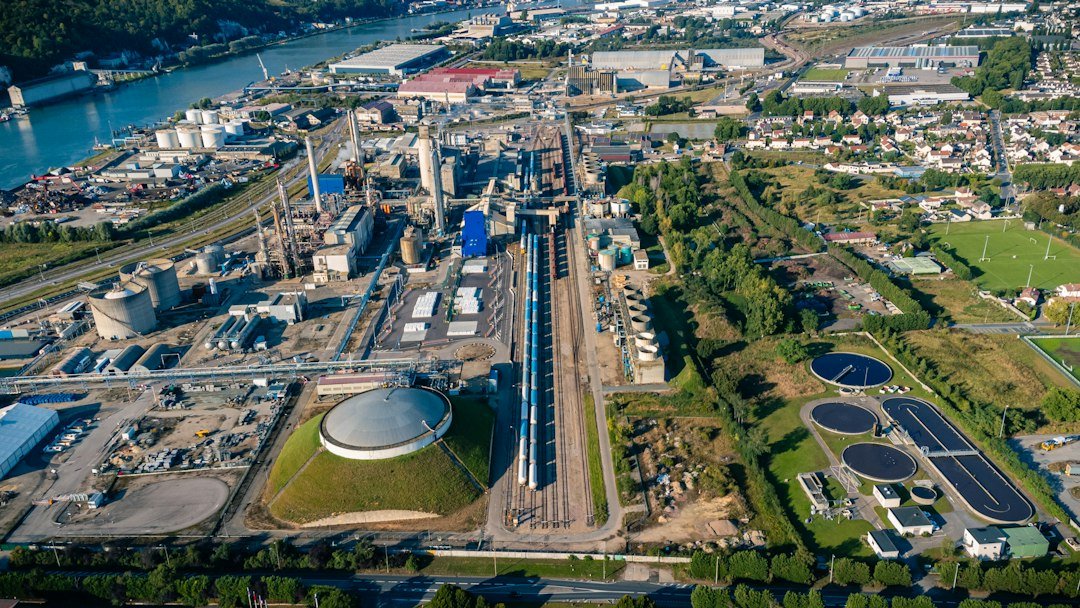
Editorial methodology: Figures and programme descriptions are attributed to UNEP’s primary publications. Vehicle comparisons represent climate-impact analogies. No independent industrial-site inspection, satellite image interpretation or interview was conducted. The featured photo is illustrative and does not document an identified MARS incident.
ARTICLE REFERENCES
Sources & Links
Explore the original resources and supporting documents.
- UNEP November 2026 Methane Progress Reportunep.org
- UNEP How MARS Worksunep.org
- UNEP MARS FAQ and Satellite Limitationsunep.org
- UNEP Kazakhstan Uzen Confirmed Mitigation Casewedocs.unep.org
- UNEP Facts About Methaneunep.org
- UNEP Eye on Methane Public Datamethanedata.unep.org
- UNEP Global Methane Status Reportwedocs.unep.org
- Eye on Methane guidancemethanedata.unep.org
External references open in a new tab. Please review the information at its original source.









AVIRALON NEWS / COMMUNITY
Comments (0)
Comments are moderated. Your comment will be reviewed by the AVIRALON editorial team before appearing publicly. Please keep the discussion respectful and relevant.
No approved comments yet.
Commenting will open after moderation and privacy checks are completed.