
Science / News
Why Better Weather Forecasts Need More Than AI: The Global Data Gap Explained
New ECMWF research shows why filling gaps in the global weather observation network could improve forecasts across borders, even as AI changes prediction.

Short Article
Weather forecasts depend on a global network of observations, not just powerful computers. The World Meteorological Organization is meeting from 23 to 27 November 2026 to discuss improvements to observing systems, data exchange and prediction. Research published by ECMWF on 9 November suggests that filling observation gaps could reduce short-range forecast uncertainty by around 30% over Africa and forecast uncertainty by up to 20% over Pacific small island developing states. These are experimental results, not improvements already achieved everywhere. Satellites provide wide coverage, while ground stations and weather balloons supply complementary measurements. Artificial intelligence can improve forecasting methods but still depends on trustworthy data. International sharing, sustained station maintenance and common standards are therefore essential. Readers should check updated forecasts and official local warnings, particularly when making weather-sensitive plans.
A weather forecast on a phone looks like a local product, but the information behind it is international. A measurement of atmospheric moisture thousands of kilometres away can change the estimated path of a storm that has yet to form. The uneven distribution of those measurements is one reason improvements in computing alone cannot deliver equally reliable forecasts everywhere.
On 23 November 2026, the World Meteorological Organization (WMO) opened a five-day meeting of its Infrastructure Commission, with the reliability of observations, data exchange and the future of artificial intelligence in prediction on the agenda. The meeting runs through 27 November. Its conclusions are not yet available. The discussion follows research published on 9 November by the European Centre for Medium-Range Weather Forecasts (ECMWF) showing how filling gaps in the world’s observing network could improve forecasts across borders.
What the new research actually found
ECMWF compared model runs with and without simulated measurements representing expanded observing networks. Its study found that additional measurements could reduce uncertainty in short-range forecasts over Africa by about 30%, and forecast uncertainty over Pacific small island developing states by as much as 20%. Improvements to tropical upper-air wind and temperature forecasts could persist for approximately seven days.
These percentages describe uncertainty reductions in the experiments, not a guaranteed improvement in the accuracy of every weather app or a measured improvement already delivered by installed stations. The results depend on the region, variables and time horizon studied. The important finding is that a measurement in an under-observed area can be more useful than another measurement in an already well-covered area. Read the ECMWF findings.
How a measurement becomes a forecast
Forecasters must estimate the atmosphere’s current condition before calculating its future behaviour. That is difficult because there is no instrument that measures every location, at every altitude, at the same time. A forecasting centre therefore combines available observations with a prior model estimate to construct a coherent starting point. This process is known as data assimilation.
Computers then calculate how the atmosphere may evolve. Traditional numerical models apply physical equations to processes such as air motion, heat transfer and moisture. If the starting conditions are inaccurate, some errors can grow as the forecast advances. This is why even a very powerful computer cannot remove the need for reliable observations. NOAA’s numerical weather prediction overview explains this link between measurements and model output.
Why satellites cannot replace everything on the ground
Different instruments answer different questions. A surface station records conditions at a specific location. A weather balloon carrying a radiosonde collects readings at different heights, while a satellite observes broad regions from orbit. Radar helps forecasters track precipitation and its movement; observations from ships, buoys and aircraft extend coverage over areas where land stations cannot operate.
Consider a city where a storm is approaching. Satellite observations can reveal its broad cloud structure, but a local station can measure the conditions actually experienced near the ground. A balloon can provide information about the layers of air above the city. The combined picture is more useful than any one instrument alone. NOAA’s guide to weather observations describes these complementary instruments.
Why a forecast depends on other countries
Air masses and weather systems travel across national borders. A missing observation upstream can affect a forecast downstream, even when the country receiving the forecast has an extensive domestic observing network. This is particularly important when predicting weather several days ahead, because the atmospheric conditions that matter may currently be far away.
The WMO’s Unified Data Policy supports international exchange of observations. Its Global Basic Observing Network, or GBON, establishes common requirements for observations from the surface and upper atmosphere. These standards help make national measurements useful to forecasting centres elsewhere.
Can artificial intelligence solve the problem?
Machine-learning models can learn relationships between past atmospheric conditions and later weather patterns. But learning these relationships does not eliminate uncertainty about what is happening now. Models still need a trustworthy picture of the present atmosphere, and their training data must be sufficiently representative.
ECMWF described a real-time research prototype on 3 November that learns to predict directly from observations instead of requiring the conventional atmospheric analysis as its starting point. The team reports that changing instrument availability, delayed readings and quality problems remain important challenges. It explicitly describes the system as experimental. Read the technical update.
The practical distinction is between improving the forecasting algorithm and improving the evidence it receives. A faster algorithm may make updates available sooner. A better observing network may make those updates more informative. These improvements can reinforce each other, but one does not automatically substitute for the other.
Why the hardest part may be keeping stations operating
A weather station is not a one-time purchase. Its sensors need maintenance and calibration; its readings need reliable communications and trained personnel. An instrument that works but cannot transmit data is of limited use to a global forecasting system. An investment programme therefore needs to measure continuity and data quality, not just equipment installed.
The Systematic Observations Financing Facility (SOFF), established by WMO, UNDP and UNEP, provides technical and financial support for countries with particularly severe observation gaps. Its focus includes long-term generation and international sharing of observations. Targeting underserved regions can improve local services while generating benefits beyond the countries making the measurements.
What readers can do with this knowledge
For everyday decisions, distinguish a forecast from a warning. A forecast describes expected conditions; an official warning communicates a potentially dangerous situation and may include advice for the affected area. Check the issue time, valid period and geographical coverage rather than relying on a screenshot of a forecast that may already be outdated.
For outdoor plans or travel, compare the most recent forecast with warnings from the local meteorological authority. For decisions several days away, treat exact timing and location as provisional and check updates closer to the event. Better observations can improve the forecast, but they do not make the atmosphere perfectly predictable.
What comes next
The WMO meeting is considering technical standards, instrument quality, international exchange and future prediction systems. As of 25 November, it is too early to say which proposals will be adopted or how quickly countries will implement them. A meaningful test of progress will be whether reliable, timely measurements from underserved areas become routinely available to forecasting systems.
The central lesson is that a forecast is not simply a calculation. It is the product of a worldwide measurement system, shared standards, skilled forecasters and computing. Improving any one of these without maintaining the others leaves a gap between technological progress and reliable public information.
Sources
- WMO — Infrastructure Commission meeting, 23 November 2026
- ECMWF — Observation impact study, 9 November 2026
- NOAA — Numerical weather prediction
- NOAA — Weather observations
- WMO — Unified Data Policy
- WMO — Global Basic Observing Network
- ECMWF — AI-DOP prototype, 3 November 2026
- WMO — Systematic Observations Financing Facility
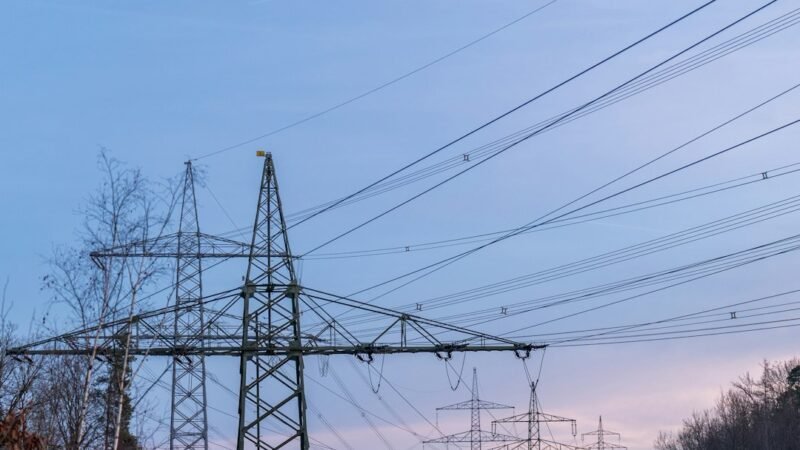
Featured photograph: Mike Coniglio / NOAA NSSL, 23 May 2019, public domain, via Wikimedia Commons. Archive photograph, not a photograph of the 2026 WMO meeting.
ARTICLE REFERENCES
Sources & Links
Explore the original resources and supporting documents.
- WMO — Infrastructure Commission meeting, 23 November 2026public.wmo.int
- ECMWF — Observation impact study, 9 November 2026ecmwf.int
- NOAA — Numerical weather predictionncei.noaa.gov
- NOAA — Weather observationsnoaa.gov
- WMO — Unified Data Policywmo.int
- WMO — Global Basic Observing Networkcommunity.wmo.int
- ECMWF — AI-DOP prototype, 3 November 2026ecmwf.int
- WMO — Systematic Observations Financing Facilitypublic.wmo.int
- Wikimedia Commonscommons.wikimedia.org
External references open in a new tab. Please review the information at its original source.









AVIRALON NEWS / COMMUNITY
Comments (0)
Comments are moderated. Your comment will be reviewed by the AVIRALON editorial team before appearing publicly. Please keep the discussion respectful and relevant.
No approved comments yet.
Commenting will open after moderation and privacy checks are completed.